News
How to Choose the Right Environmental Test Chamber for Your Application
Selecting the right environmental test chamber is an important decision for any reliability testing laboratory, engineering team or manufacturing facility.
- Info
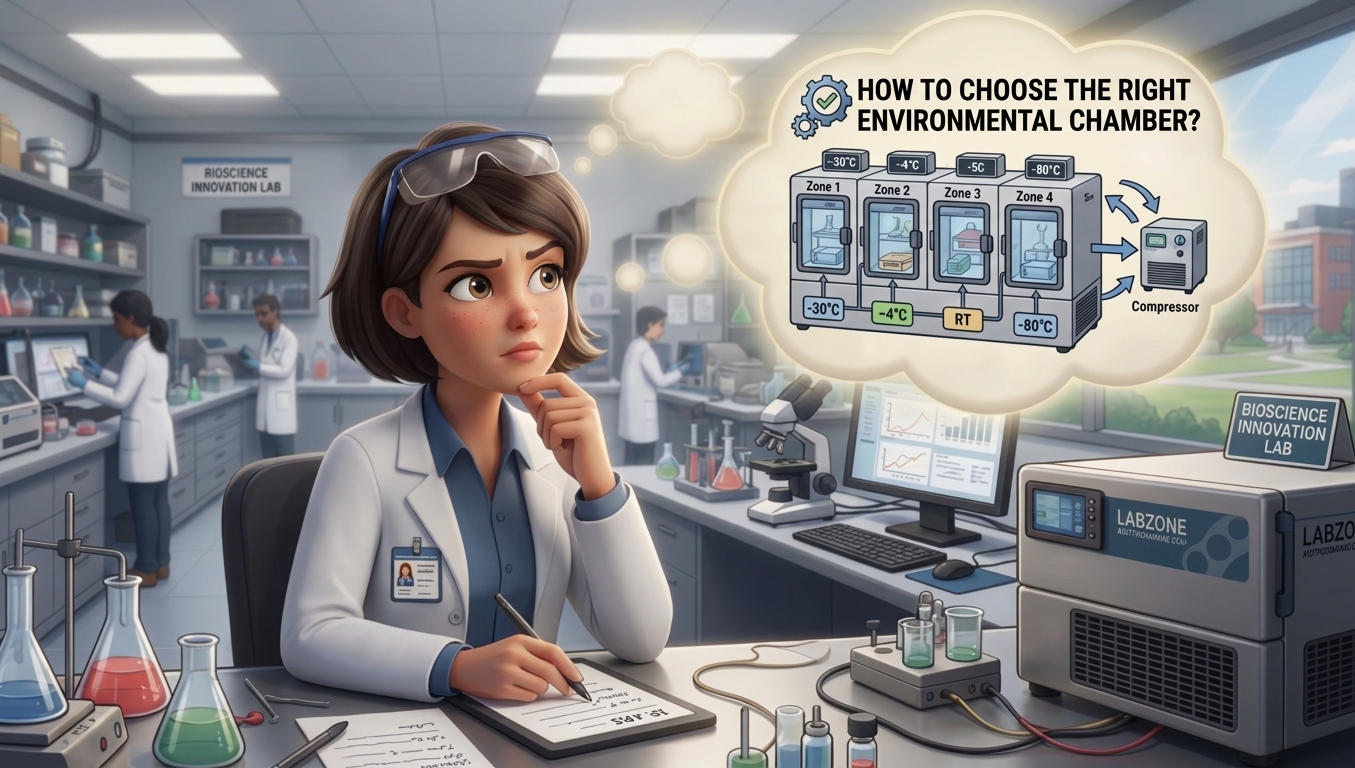
With different chamber sizes, temperature ranges, humidity capabilities and performance specifications available, choosing the right equipment can sometimes be challenging.
The most suitable chamber is not necessarily the largest or most powerful model. It should be selected based on the test requirements, product characteristics, testing standards and future needs.
Here are several key factors to consider when selecting an environmental test chamber.
1. Define Your Testing Requirements
The first step is to clearly understand what you need to test.
Different products and applications require different environmental conditions. Consider:
- Required temperature range
- Required humidity range
- Temperature change or ramp rate
- Test duration
- Number and size of test samples
- Required test standards or specifications
- Frequency of testing
For example, a basic temperature test may only require temperature control, while a temperature and humidity test will require a chamber capable of controlling both temperature and relative humidity.
Clearly defining these requirements will help narrow down the appropriate chamber specification.
2. Consider the Required Temperature Range
Temperature range is one of the most important specifications when selecting an environmental chamber.
Depending on the application, testing may require temperatures from below freezing to elevated temperatures.
However, selecting the widest possible temperature range is not always necessary.
A chamber should be selected based on the actual test requirements, while also allowing a reasonable operating margin. Operating a chamber continuously at an extreme temperature may also affect energy consumption, test capacity and equipment life.
3. Determine the Required Chamber Size
Chamber volume should be selected based on the size and quantity of the test samples.
Common chamber sizes range from compact benchtop units to large floor-standing chambers and walk-in chambers.
When determining the required volume, consider not only the current product size but also:
- Number of samples per test
- Fixture and rack requirements
- Cable routing
- Air circulation around the samples
- Future testing requirements
A chamber that is too small may limit testing capacity, while an unnecessarily large chamber can increase the initial investment and operating cost.
4. Temperature Change Rate
Some applications require controlled temperature changes at a specific rate.
For these applications, the chamber’s temperature change rate becomes an important specification.
For example, a standard environmental chamber may be suitable for gradual temperature changes, while applications requiring rapid temperature transitions may require a rapid temperature change chamber or thermal shock chamber.
It is therefore important to distinguish between the required test profile and simply looking at the chamber’s minimum and maximum temperature specifications.
5. Humidity Control
If your testing involves moisture or humidity exposure, the chamber must provide suitable humidity control across the required temperature range.
Typical humidity testing may be used to evaluate:
- Corrosion resistance
- Moisture sensitivity
- Material degradation
- Electrical insulation performance
- Long-term product reliability
The required humidity range and stability should therefore be considered together with the temperature requirements.
6. Understand Your Test Standards
Environmental testing is often performed according to specific customer specifications, international standards or industry requirements.
Before purchasing a chamber, identify the applicable test method and determine whether the equipment can achieve the required conditions.
Depending on the application, relevant requirements may come from standards such as IEC, ISO, ASTM, JEDEC, MIL-STD or specific automotive and aerospace testing specifications.
The chamber should be selected based on the actual test profile rather than simply selecting equipment based on general temperature specifications.
7. Consider Electrical and Mechanical Requirements
The test chamber itself is only part of the testing system.
Some applications require electrical power to be supplied to the test samples during testing. Others may require communication interfaces, additional sensors or external measurement equipment.
Before installation, consider:
- Electrical power requirements
- Heat load generated by the test samples
- Cable and feedthrough requirements
- Communication interfaces
- Additional monitoring sensors
- Equipment footprint and access requirements
- Facility cooling or water requirements, where applicable
These factors should be reviewed early to avoid installation issues later.
8. Think About Your Future Testing Needs
An environmental chamber can be a long-term investment.
While the chamber should meet your current requirements, it is also worth considering how your testing needs may develop over the next few years.
For example, you may require:
- Higher testing capacity
- Additional temperature ranges
- More test automation
- Remote monitoring
- Additional data logging
- Integration with other reliability test equipment
Planning for future requirements can help reduce the need for another major equipment investment later.
9. Consider Service and Technical Support
Equipment performance is important, but after-sales support is equally important for a reliability testing facility.
Before selecting a supplier, consider the availability of:
- Installation and commissioning
- Preventive maintenance
- Troubleshooting support
- Spare parts
- Calibration services
- Technical consultation
A reliable local support team can help minimize downtime and keep testing operations running efficiently.
Selecting the Right Chamber Is About More Than Specifications
There is no single environmental test chamber that is suitable for every application.
The right solution depends on the test profile, product characteristics, environmental conditions, chamber capacity and long-term testing requirements.
At MicroRel Solution, we work with customers to understand their reliability testing requirements and recommend suitable environmental testing solutions for their applications.
Our solutions cover environmental test chambers, temperature and humidity chambers, thermal shock chambers, ovens and other reliability testing equipment, supported by technical consultation, installation and commissioning.
Whether you are setting up a new reliability laboratory, expanding your existing testing capacity or replacing an aging chamber, selecting the right equipment from the beginning can make a significant difference to your testing efficiency and long-term operating costs.
Need Help Selecting an Environmental Test Chamber?
Not sure which chamber specification is suitable for your application?
Contact us to discuss your testing requirements. Our team can help you evaluate the appropriate chamber type, capacity and specifications for your application.